
Archery in Indonesia: Jemparingan and Target Archery
2026-10-20 · 5 min read
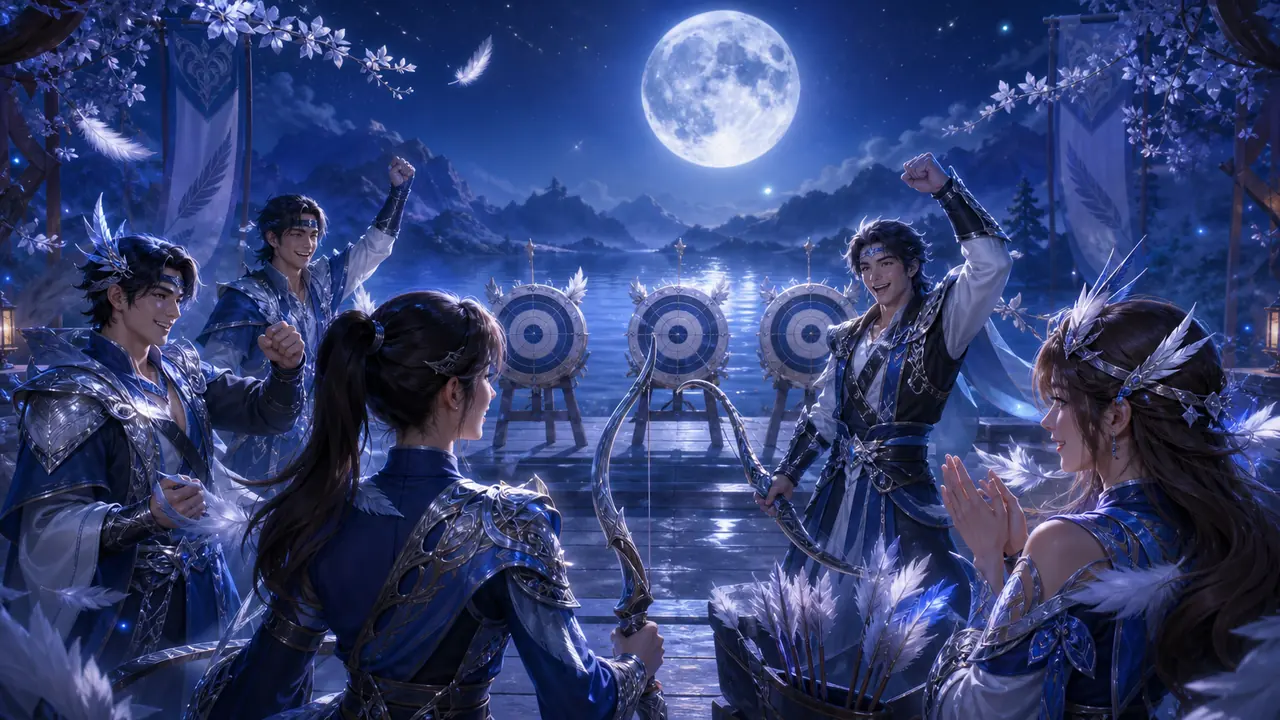
Panah Bulan is set at an imaginary archery contest under the full moon, but the mood behind it is real. Archery in Indonesia has two faces that sit comfortably side by side: a traditional, almost meditative style from Java, and the modern target archery practised at schools, clubs and sports events across the country. This article looks at both, and at the etiquette and safety rules that every archer, traditional or modern, learns on their first day.
Jemparingan: archery while sitting
Jemparingan is the traditional archery of Java, closely associated with Yogyakarta and the culture of the Mataram courts. The name comes from jemparing, an old Javanese word for arrow. What surprises most first-time spectators is the posture: archers do not stand. They sit cross-legged on the ground, back straight, and draw the bow from that seated position.
The bow, called a gandewa, is traditionally made from wood or bamboo, and the arrows are light shafts with feather fletchings. Because the archer is sitting, the bow is usually held tilted rather than upright, and the draw is shorter and gentler than in modern sport archery.
The target
Instead of a round face with rings, jemparingan uses a small hanging target, often called bandulan or wong-wongan. It is a narrow cylinder hung from a frame, with a short coloured top section and a longer white body below. Hitting the top part usually counts for more than hitting the body. Because the target is slim and hangs freely, it is far harder to hit than it looks, and a good hit is greeted with quiet appreciation rather than loud celebration.
Aiming with feeling
One of the most distinctive ideas in jemparingan, especially in the Mataram style, is that the archer does not aim by lining up the arrow with the eye in the way a modern target archer does. Instead, the shot is guided by feel, concentration and a steady inner state. Practitioners often describe it as training for the mind as much as for the body: you cannot hit the target if you are impatient, angry or distracted.
Dress and atmosphere
At many jemparingan gatherings, archers wear traditional Javanese clothing, such as a surjan shirt and blangkon headcloth for men or a kebaya for women. Events are often held in open fields or courtyards, sometimes in the late afternoon, and the atmosphere is calm and social. People chat between rounds, share tea and snacks, and newcomers are welcomed and shown how to sit and hold the bow.
Modern target archery
Alongside the traditional style, Indonesia has an active modern target archery scene. This is the form of archery you see at multi-sport events: archers stand side by side on a shooting line and shoot at round target faces set at a fixed distance.
Bows
The two most common modern bows are:
- Recurve bows, whose limb tips curve away from the archer. This is the type used in Olympic archery.
- Compound bows, which use a system of cables and cams to make holding the bow at full draw easier. They are usually fitted with a magnifying sight and a release aid.
Beginners often start with simple recurve bows of low draw weight, so they can focus on form before strength.
The target face
A standard target face has ten scoring rings. The centre is gold, followed by red, blue, black and white towards the edge. The closer the arrow lands to the centre, the higher the score. Archers shoot in sets of a few arrows at a time, then walk forward together to score and collect them.
Form over force
Modern coaches describe a shot as a repeatable sequence: stance, nocking the arrow, setting the grip, raising the bow, drawing to a fixed anchor point near the face, aiming, releasing and following through. The goal is to perform the same sequence the same way every time. Interestingly, that idea is not so far from jemparingan. In both styles, calm and consistency beat raw strength.
Etiquette and safety on any range
Whatever style you try, archery is only fun when it is safe. Clubs and instructors teach the same core rules everywhere:
- Never point a bow at a person, even without an arrow, and never draw a bow towards anyone.
- Only nock an arrow on the shooting line, and only when the range is open.
- Follow the signals. Many ranges use whistle or verbal signals for "start shooting", "stop" and "collect arrows". When you hear stop, lower the bow at once.
- Collect arrows together. Nobody walks forward to the targets until everyone has finished shooting and the signal is given. Walk, do not run, on the range.
- Never dry-fire. Releasing a drawn string without an arrow can damage the bow and injure the archer.
- Check your equipment. Look for cracked arrows, worn strings or damaged limbs before you shoot.
- Respect other archers. Keep quiet near the line, do not touch someone else's bow without asking and stand back from an archer who is mid-shot.
These rules apply just as much at a relaxed jemparingan afternoon as at a formal tournament. If you would like to try archery yourself, look for a local club or an organised event where an instructor can provide equipment and supervision.
From the range to the reels
In Panah Bulan we wanted to capture that combination of stillness and focus. Our archer Arya never rushes a shot, our bow maker Mbah Wira checks every string by hand, and the targets in the game are always straw, never anything living. Our game, Panah Cahaya, is a free social casino slot for adults 18+, played with virtual coins only. It has nothing to do with real archery skill, and nothing in it can be won for real, but we hope it carries a little of the quiet beauty of the sport.
Curious about the game itself? Read about its features or learn how to play.